
“I got a letter/summon from TNB.”
“I suspect my tenant is doing something dodgy.”
“TNB came, checked the meter at my shop, and took it away.”
Do any of these sound familiar?
If so, you’re not alone, and you’re definitely not the first.
Meter tampering claims have surged in Malaysia in recent years, largely driven by illegal crypto mining. TNB has lost RM5.14 billion to electricity theft since 2020. Between 2020 and 2025, it carried out 91 special operations, inspected 14,489 premises, and opened 77 investigation papers – much of it tied to meter tampering, illegal connections and unauthorized electricity use.
TNB has not been lenient against wrongdoers. But here’s the problem: a lot of ordinary landlords and shop owners get caught in the crossfire, often for something a tenant did without their knowledge.
So before anything else, let’s clear up what’s actually happening to you.
What is “meter tampering,” really?
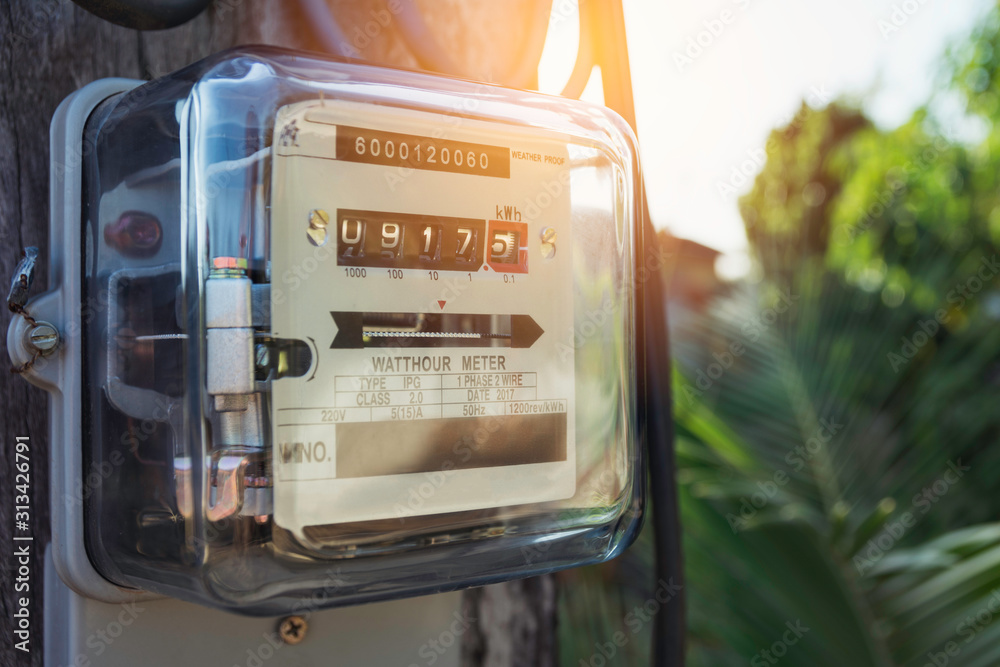
In plain terms: TNB believes your electricity meter wasn’t recording your real usage, either because someone physically altered it, or because someone bypassed it entirely (cut wires, direct connections, magnets, foreign objects slowing the dial).
You might hear this called “meter tempering” (a common misspelling), “curi elektrik,” or simply “TNB fine.” They all point to the same thing.
A lot of these cases, especially involving unusually high, round-the-clock power usage, trace back to crypto mining tenants, and ometimes tenants the landlord genuinely had no idea about.
Is this a criminal charge, a civil bill, or both?
This is where most people get confused.
Section 37 of the Electricity Supply Act 1990 is the criminal offence, which may lead to fines or jail time.
Section 38 is TNB’s separate civil right to claim “loss of revenue” from you directly.
These two run independently. You can receive a civil claim for tens or hundreds of thousands of ringgit with no criminal charge against you at all.
That’s usually what catches landlords off guard – they might misconceive this as merely a bill, or that tThat’s usually what catches landlords off guard: they might misconstrue it as merely a bill, or assume that because they’re not the wrongdoer, they’re not liable, and consequently ignore the claim.
“But my tenant is the one committing electricity theft, why am I paying?”
Because TNB usually pursues whoever is the registered account holder, not whoever caused the problem.
The relationship, contractually, is between TNB and the account holder, not the person actually living or working there.
The courts have tested the “it wasn’t me, it was my tenant” argument before, and it generally fails. If the account is in your name, “I didn’t do it” is rarely enough on its own.
That doesn’t mean you’re defenseless – more on that in Part 2!
But it does mean the starting assumption should be: the account holder is on the hook first and has to sort out the tenant separately.
Can TNB just cut off my electricity?
Sometimes, but not always, and not indefinitely. Once TNB has already rectified or replaced a tampered meter, the law has been interpreted to say TNB can’t keep using disconnection as leverage to force payment of the old debt.
At that point, it has to pursue you through a civil claim instead.
So a disconnection threat after the meter has already been fixed may itself be on shaky legal ground – it is worth pushing back on rather than simply paying to avoid it.
Here’s what you SHOULD NOT assume
A wrong assumption usually leads to the wrong first move, and that’s where it costs you the most.
❌ “The number TNB gave me must be accurate.”
It doesn’t have to be. TNB’s calculation is a starting position, not a verified fact. The methodology, the assumed usage period, and the assumed cause can all be wrong – and in more than one reported case, they were wrong.
❌ “I have no say over the amount.”
You do. TNB’s own figure is only meant to be treated as preliminary evidence, not a final verdict. It can be challenged on how it was calculated, over what period, and based on what assumptions.
❌ “I have to pay in full, right away, no options.”
Not necessarily. There’s a difference between acknowledging a bill exists and accepting the exact figure demanded. Paying immediately, or worse, signing anything that looks like an admission, can lock you into a number you never should have accepted.
Coming up in Part 2: exactly what you should do instead, including a real case where a company successfully beat back a RM383,707.05 TNB claim by challenging how the number was calculated.
Pingback: TNB Says Someone Stole Electricity at My Property, what should I do now? A Malaysian Landlord's Guide (Part 2) | Jesselyn Tham