
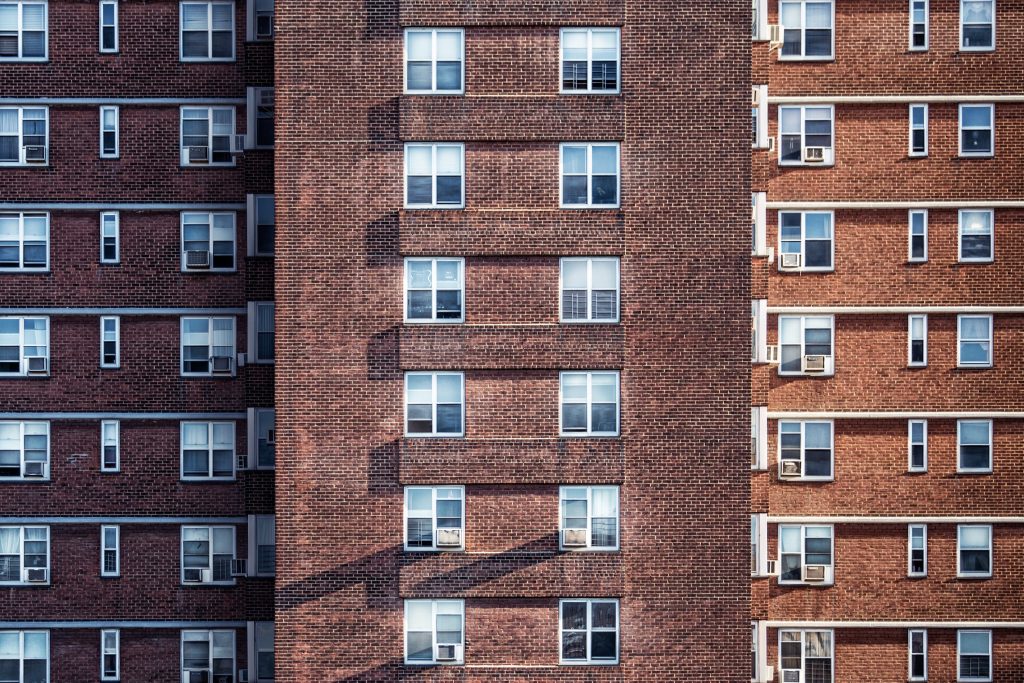
Due to the scarcity of land in the Klang Valley, there has been a significant increase in the construction of high-rise developments such as condominiums and apartments. These types of developments are referred to as strata properties because they are built on a single piece of undivided land, known as the master title, which is later subdivided into individual strata titles for each respective unit.
Unlike owners of landed property, owners of strata properties have additional responsibilities for the maintenance and management of the common facilities within the development, in addition to their own units. To address these responsibilities, the law has established statutory bodies in the form of a Management Corporation and a Joint Management Body, which are responsible for the maintenance and management of the building.
The main legislations that deal with strata management issues are the Building and Common Property (Maintenance and Management) Act 2007 (BCPA), Strata Title Act 1985 (STA), and Strata Management Act 2013 (SMA).
MANAGEMENT CORPORATION (MC)
The Management Corporation (MC) is created under Section 17 of the STA to manage not only the subdivided buildings (Parcels) but also the land and common properties within the strata property, which include hallways, gymnasiums, swimming pools, playgrounds, elevators, and more.
The MC consists of parcel owners who have been voted into the committee by other owners during an Annual General Meeting. It comes into existence upon the opening of a book of the strata register for a parcel or land under the STA, as stated in Section 17.
The Joint Management Body (JMB) is a body corporate established under Section 17 of the SMA. The JMB consists of the developer and the purchasers after the delivery of vacant possession of the parcels by the developer to the purchasers.
The JMB exists prior to the issuance of the individual strata titles for the Parcels. Once the strata titles are issued and the strata book of register is opened, the MC is then incorporated to take over from the JMB, as provided in Section 17(5) of the SMA.
Powers of a Management Corporation
Section 143(2) and (3) of the SMA (which incorporates Section 76(1) of the previous STA) empower the MC to sue for matters related to common property if authorized by a resolution signed by all council members of the MC.
In The Summit Subang USJ Management Corporation v Koh Kim Beng [2018] 1 LNS 907, the High Court explained that the MC’s resolutions are those voted and passed during annual general meetings and/or extraordinary general meetings among the management committee, in accordance with Section 56(2) of the SMA, specifically the Second Schedule of the Act.
The powers of the MC in relation to the parcels, land, and common properties are provided in Sections 56(2), 59(2), and 70(2) of the SMA. Essentially, the MC has the duty to properly manage and maintain the strata building and enforce the by-laws of the respective building. The extent of “maintaining” the individual parcels, land, and common properties can be seen specifically under Section 59(2) of the SMA, which authorizes the MC to, among other things:
(i) Enter upon any parcel or common property to carry out repair or maintenance work;
(ii) Collect contributions to the sinking fund from proprietors;
(iii) Recover from proprietors any money spent on repairs or any work, as well as any sums due;
(iv) Take legal actions, at its own expense or as agents to the proprietors, if there are structural defects in the parcels in question.
Meanwhile, the extent of the MC’s powers in managing the individual parcels and common properties is provided in Section 70(2) of the SMA, which essentially authorizes the MC to implement by-laws for regulating the control, management, administration, use, and enjoyment of the parcels, land, and common properties through resolutions passed at general meetings.
Duties of a Management Corporation
The duties of the MC with regard to day-to-day administration are contained in Sections 59(1), 60, 61, 70(4), and the relevant provisions in the Second Schedule of the SMA, as well as the Strata Management (Maintenance and Management) Regulations 2015 (“SMMAR”).
Under Section 59(1) of the SMA, the duties of the MC include, among others:
(i) Properly maintaining and managing the parcels and the common property and keeping them in a state of good and serviceable repair;
(ii) Determining and imposing charges to be deposited into the maintenance account for the proper maintenance and management of the parcels or lands and the common property;
(iii) Determining and imposing contributions to the sinking fund to be deposited into the sinking fund account, and more.

JOINT MANAGEMENT BODY (JMB)
Duties of a Joint Management Body
The duties of a JMB are outlined in Section 21(1) of the SMA, which include, among others:
(i) Maintaining and managing the parcels and common property of the building and keeping them in a state of good and serviceable repair;
(ii) Determining and imposing charges for the maintenance and management of the parcels and common property of the building;
(iii) Determining and imposing contributions to the sinking fund;
(iv) Doing other things necessary for the proper maintenance and management of the parcels and common property of the building;
(v) Complying with any notice or order given or made by the local authority or any competent public authority.
Like the MC, the JMB also has the power to impose interest for non-payment or late payment and a penalty sum for any breach of the by-laws. However, Section 32(3)(i) of the SMA clearly states that any fine imposed for the breach of any by-laws shall not exceed RM200.
The powers specified in the Act are non-exhaustive. Although the Building and Common Property (Management & Maintenance) Act 2007 (now replaced by the SMA) did not explicitly state the power of the JMB to sell, lease, or rent out common property, the Court of Appeal in Badan Pengurusan Tiara Duta v Timeout Resources Sdn Bhd [2015] 1 MLJ 110 held that such power is implied under the general provision in Section 8(2)(g) of the Act (now Section 21(2)(h) of the SMA) as something reasonably necessary for the performance of its duties.
However, there is a limit to the powers of the JMB. A JMB is not entitled to fix and collect different rates of maintenance charges apart from the “amount per proposed share unit” basis as provided in the SMA. It is important to note that in Muhamad Nazri Muhamad v JMB Menara Rajawali & Anor [2019] 10 CLJ 547, the Court of Appeal held that the JMB and the JMC do not have the power to fix and impose different rates of maintenance charges that are not sanctioned by the SMA, even if approval was obtained in a unanimous resolution at the Annual General Meeting.
In addition to the usual payment for maintenance and sinking fund, the JMB can also require parcel owners to make additional payments pursuant to Section 33 of the SMA. This applies when the JMB has lawfully incurred an amount of money in exercising its powers to carry out its duties or obligations. For example, this can include expenses incurred to rectify defects in common properties or additional security measures.
Pending the establishment of the MC, the JMB has the responsibility to manage and maintain the common facility and common property. One question that often arises is whether a JMB can still bring an action after the MC is established. This was answered by the Court of Appeal in Park Access Sdn Bhd & Ors v Badan Pengurusan Bersama Prima Avenue dan DPCC Fasa 1 (Block G, H, I) and other appeals [2018] 1 LNS 711, where, upon scrutinizing Section 28(2) of the SMA, the Court held that Parliament clearly intended for the JMB to continue to have the right to sue and be sued until the expiry of 1 month from the date of the first Annual General Meeting of the MC.
The MC and JMB are essentially bodies incorporated to ensure the living spaces, common properties, and facilities of a strata development are well maintained. Given the powers and duties conferred upon these bodies, they can be compared to municipal councils for each respective development.
This comes as no surprise as these strata properties create small communities among the parcel owners with the aim of preserving safe and harmonious living. Ultimately, instead of burdening the developer or allowing the developer to maintain authority over the strata properties, the law enforces responsibility and mindfulness among the parcel owners when living in a strata property. So when you want to buy a condo, please be prepared to love thy neighbor!